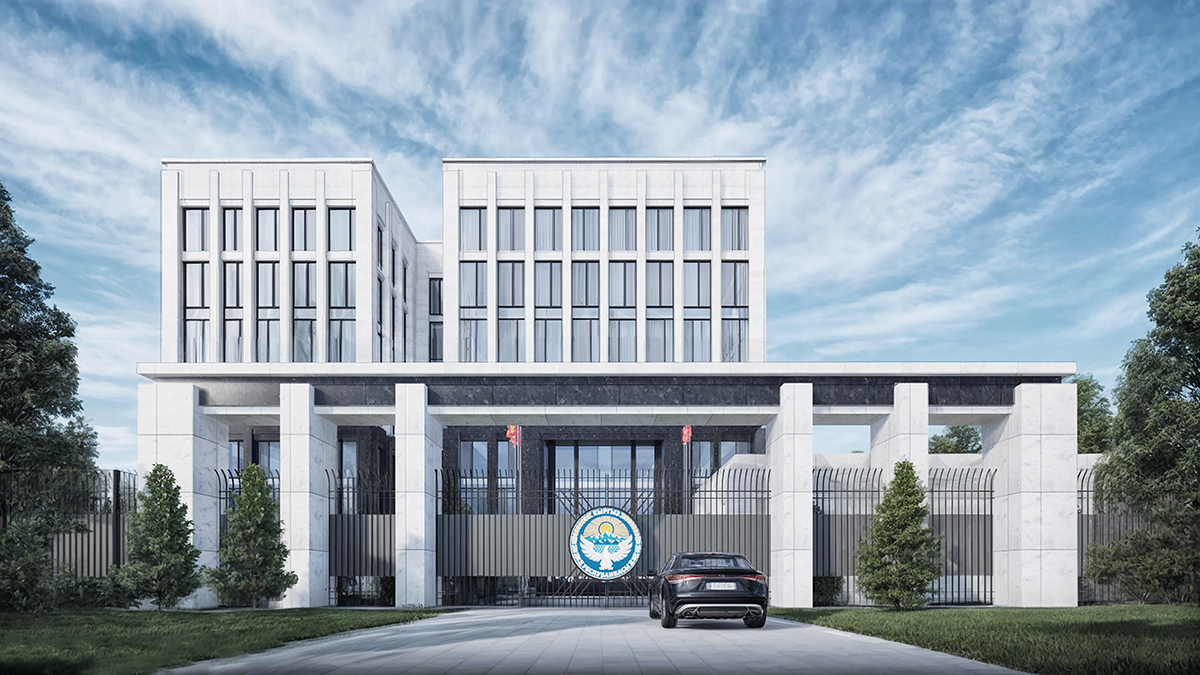
National Security Building of the Kyrgyz Republic (GKNB)
The Kyrgyz Republic's National Security Building (GKNB) in Bishkek is a strategic public facility built to current engineering and technology standards for national security operations. Designed to stringent security requirements, the modern complex contains critical operational areas, administrative units and support facilities.
- End Client
- Kyrgyz Republic National Security Building
- Direct Client
- AMANAT
- Location
- Bishkek / Kyrgyzstan
- Status
- Completed
- Project Period
- 2024-2025
- Project Area
- 45 000 m²
- Installed Capacity
- 15 MVA
- Contract Role
- Turnkey HVAC Systems Contractor
Arenes’ Role
Project Technical Scope
Medium- and Low-Voltage Systems
Distribution infrastructure, medium- and low-voltage systems, distribution panels, supply lines and power installations were installed for 15 MVA capacity and commissioned to the design for reliable, uninterrupted support of critical operations.
Specialist Electrical Systems
Specialist electrical systems were installed for operations centres, security units, data centres, technical rooms and administrative areas. Critical-load infrastructure and continuous-power solutions serve high-security areas throughout the facility.
Low-Current Systems
Fire detection and alarm, CCTV, data and communications, access control, sound, emergency public address and other security-focused low-current systems were installed and integrated throughout the facility.
Mechanical Systems
All heating, cooling, ventilation and air-conditioning systems were installed to international standards. Environmental conditions for operational areas, offices, technical rooms and shared spaces were designed for high comfort and energy efficiency.
Automation Systems
Automation infrastructure was installed for central monitoring and management of mechanical and electrical systems. HVAC, energy monitoring and building management systems were integrated for sustainable, efficient operation throughout the facility.
Testing and Commissioning
Electrical, mechanical, automation and low-current systems underwent functional tests, integration verification and performance checks. They were commissioned to international standards and handed over ready for operation.
Project Gallery